Most public blockchains allow anyone to use an explorer to review transactions associated with an address. So a reasonable question, asked by victims and by lawyers alike, is what a blockchain investigator does that a person with an explorer and an afternoon cannot. The honest answer is: the explorer shows you a transaction; the investigator establishes what it means, who is on the other end of it, and whether anything can be done about it — and produces that in a form an exchange, a police unit or a court can act on. The gap between those two things is the profession.
What an explorer shows, and where it stops
An explorer answers one question well: what did this address do? It lists transfers in and out, with amounts, timestamps and counterpart addresses. For a simple theft — funds leave your wallet, land in one address, sit there — that is enough to see what happened.
It stops being enough within one or two hops. The stolen funds are split across twenty addresses. Half go through a bridge to another chain and the explorer you are using cannot follow. A portion enters a smart contract whose event log, not its transfer list, records what happened. Some of it is swapped for another token on a decentralised exchange, and the "transfer" you see is a contract call. And then it arrives at an address that is one of a very large number belonging to a centralised exchange — an address that the explorer labels, if you are lucky, with the exchange's name, and otherwise with nothing.
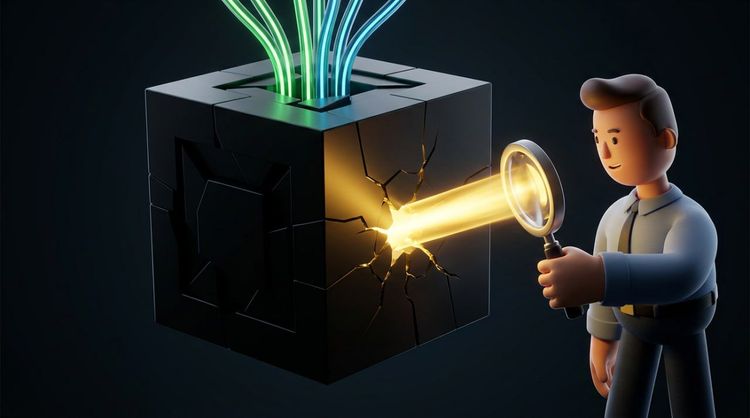
At that point the explorer has told you everything it knows, and you know: the funds moved. You do not know who moved them, which of the intermediate addresses belong to one operator, which endpoint is a service that will answer a request, or whether the money is still there. Those are the questions that decide a case.
What an investigator actually does
The work has a shape, and it is roughly the same whether the client is a theft victim, a company, an insurer or a law firm. We set out our own version of it on the investigations page; the generic version is this.
Reconstruction, not reading
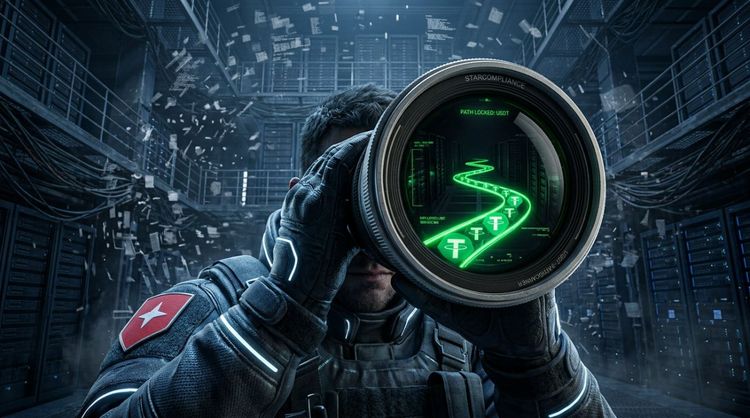
An investigator does not read the chain; they rebuild the movement of a specific sum. That means following it through the places an explorer does not show cleanly — contract event logs, token approvals that let a drainer move funds without a visible "send", bridge deposits matched to withdrawals on another chain by amount and timing, swaps that change the asset. The output is a single narrative of where the value went, across chains and assets, with a transaction hash behind every step. The mechanics of that are described on the crypto tracing page.
Clustering: from addresses to operators
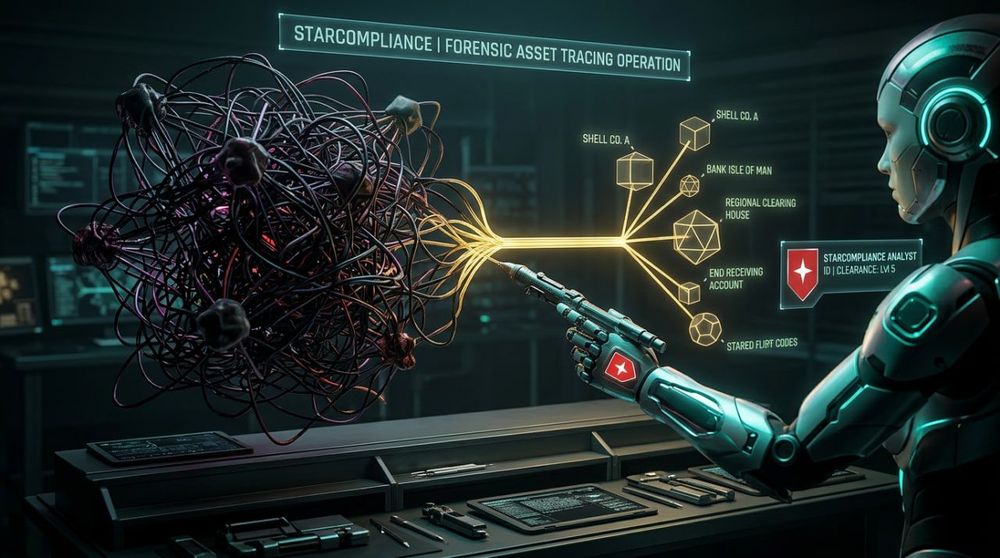
A thief may use multiple addresses, sometimes hundreds of them. The investigator's job is to assess whether multiple addresses may be controlled by the same party, using relevant on-chain heuristics and behavioural patterns. Where supported by sufficient evidence, multiple addresses can be clustered as likely belonging to the same operator. This is the step that turns "the funds are scattered" into "the funds are in three places, and one of them is a service".
Attribution to services
The single most valuable fact in a trace is that a given endpoint belongs to a centralised exchange, payment processor, OTC desk or another identifiable service provider — because such a party may have a compliance function, a legal presence and established procedures for responding to requests. Attribution comes from a mix of commercial datasets, partner platforms, and the investigator's own labelling work. It is also where honesty matters most: an investigator says "this address is attributed to Exchange X with high confidence" or "this address is unattributed", and does not dress a guess as a fact. On-chain evidence alone usually cannot conclusively identify the individual controlling an address, and an investigator who claims otherwise is telling you something about themselves.
Mixers, bridges and the places the trail is designed to break
Laundering is engineered to defeat exactly the explorer-and-afternoon approach. Mixers can pool funds, while chain-hopping may move assets to networks where attribution and tracing become more difficult; peel chains shave small amounts off at each step. An investigator works these with methods that are statistical rather than deterministic — volume and timing correlation across a mixer, matching of bridge deposits and withdrawals — and reports the result as a hypothesis with a confidence level, not as a certainty. What that looks like in practice is on the mixer tracing page.
Evidence, in a form a third party can check
The trace is worth nothing if it lives in one analyst's head or in a tool's session. The deliverable is a report: every step referenced to a transaction hash, every attribution sourced, every inference labelled as such, and the artefacts fixed so that a reader can verify them independently — in our own practice, evidence is fixed with SHA-256 hashes and a chain of custody is kept when handling it. Whether a given court or authority accepts a given report is that body's decision, not the author's; the author's job is to make the report checkable. What such a report contains is set out on the blockchain forensics page.
Carrying the finding to someone who can act
This is the part most people do not expect. The trace may identify that funds have reached or remain at Exchange X. Someone now has to put that in front of Exchange X's compliance team in the form they act on, get the transactions flagged with the screening providers the exchange relies on, support a police report with the evidence, and — through lawyers admitted in the right jurisdiction — support the process of seeking a longer-term freeze and, where legally possible, the eventual return of funds. The investigator is the person holding the facts through that whole sequence. In our own cases the legal steps are carried out by partner law firms; the investigative work stays with us.
What the tools do, and what they do not
A blockchain investigator uses analytics platforms — the same commercial tools exchanges use for screening, plus partner platforms and in-house graphing. It is fair to ask whether the tool is the investigator. It is not, for the same reason a spreadsheet is not an accountant. The tool proposes clusters, labels and paths; the investigator tests them, discards the false ones, follows the leads the tool cannot see, and takes responsibility for the conclusion. If your organisation needs the tool rather than the finding, the platforms are the right purchase — two of the ones we work with are named on our credentials page, with the partnerships confirmed on the partners' own sites. If you need the money found and the case carried, you need the person.
What a blockchain investigator cannot do
The profession is defined as much by its limits as by its methods, and an investigator who does not state them is not one.
- Identify a person from the chain alone. Attribution reaches a service, and the service holds the identity. Getting from the service to the name is a legal step, taken by an authority.
- Work Monero tracing cases. Due to Monero's privacy features, we generally cannot produce the level of reliable transactional evidence required for our recovery process, so we decline those cases rather than bill the attempt.
- Freeze, return or promise. The trace establishes facts. Exchanges, issuers, police and courts act on them, on their own timetable. An investigator cannot guarantee any of them will.
- Substitute for a lawyer. Filing, applying for orders and appearing before a court are legal practice. We do not practise law and say so on every page.
Who hires one
Victims of theft, once the loss is large enough to justify an investigation — our published threshold is a loss from $200,000, with smaller cases reviewed individually. Companies that suffered a breach and need to know what left and where it went before deciding anything else. Law firms and insurers running their own matter, who need the forensic work scoped on its own — the trace and the report — with the legal steps staying in-house. Compliance teams at exchanges and payment providers who received a flagged deposit and need to understand its history before answering their regulator. And people about to send money to a platform who want the counterparty's addresses checked first — that is a screening job, done with AMLOfficer's AML check; AMLOfficer was founded by StarCompliance.
How to tell a real investigator from a label
The title "blockchain investigator" is not subject to a single universal licensing or regulatory standard, and it is used by people with an explorer tab open. The checks are the same ones we publish for recovery firms on the verification page: a licensed entity you can look up, named people, a written statement of what they refuse to do, partners who confirm the relationship on their own sites, and — specific to this profession — a sample of how they report: does every claim in it point to a transaction hash, does it distinguish fact from inference, and does it say where attribution stopped? A report that reads as certain from beginning to end was written for the client's comfort, not for the compliance desk that will have to act on it.
If the funds are traceable and the loss is significant, send us the transaction hashes: the assessment is free, and we aim to respond within two business hours, including when the answer is that there is nothing to pursue. Write through the contact page or message @StarCompliance on Telegram.
Questions people ask about blockchain investigators
Can I trace stolen crypto myself with a block explorer?
For one or two hops, often yes. The trail often becomes more difficult to interpret at a split, bridge, swap or exchange deposit address, where an explorer shows a transfer but not what it means or who is behind it.
Can a blockchain investigator identify the thief?
Not from the chain alone. Attribution reaches a service, and the service holds the identity; getting from the service to a name is a legal step taken by an authority.
Is the analytics tool the same as an investigator?
No. The tool proposes clusters, labels and paths; the investigator tests them, discards the false ones, follows the leads the tool cannot see and takes responsibility for the conclusion.
What does an investigation report contain?
Every step referenced to a transaction hash, every attribution sourced, every inference labelled as such, and the artefacts fixed with SHA-256 hashes under a chain of custody. Whether a court or an authority accepts it is that body's decision.
Can funds that went through a mixer be traced?
Sometimes, statistically — by volume and timing correlation — and the result is reported as a hypothesis with a confidence level, not as a fact. We do not take Monero cases: due to Monero's privacy features, we generally cannot produce the level of reliable transactional evidence required for our recovery process.
Who hires a blockchain investigator?
Victims of theft with a loss large enough to justify an investigation — our published threshold is a loss from $200,000, with smaller cases reviewed individually — companies after a breach, law firms and insurers who need the forensic work on its own, and compliance teams at exchanges and payment providers.