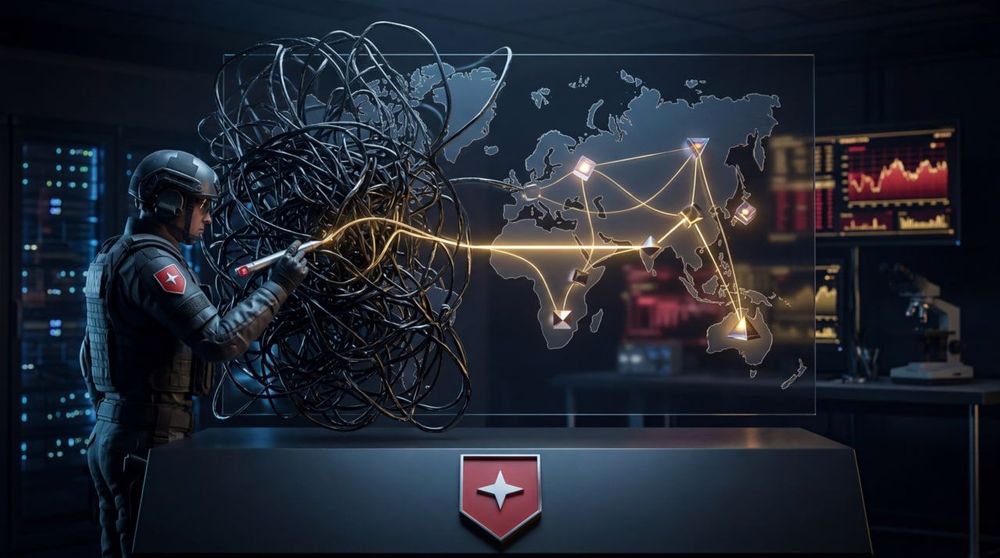
On 17 August 2026, CryptoProcessing announced that it has established an operational cooperation with StarCompliance to support existing merchant-related processes involving digital asset risk review, documentation, and asset restriction cases, where applicable. The full announcement is published on the CryptoProcessing site: CryptoProcessing Established Operational Cooperation with StarCompliance.
This note sets out the same arrangement from our side of the table: what we may be asked to do when a merchant incident reaches us, which of our capabilities the cooperation draws on, and — equally important — where our involvement stops.
What the cooperation covers
The cooperation is intended to support existing client servicing and operational continuity at CryptoProcessing, alongside the safeguards and protective measures already in place there, in accordance with applicable legal, regulatory, contractual, and compliance requirements.
Under it, if an existing CryptoProcessing merchant becomes the victim of a malicious attack involving the theft of digital assets, StarCompliance may provide specialized support throughout the asset recovery process. As set out in the announcement, that support may include:
- Blockchain intelligence and transaction tracing — reconstructing where the value went, across chains, bridges, and swaps.
- Coordination with exchanges and other relevant parties — reaching the virtual asset service providers that actually hold the funds.
- Engagement with law enforcement where appropriate — supplying analysis in a form investigators and counsel can act on.
- Assistance with efforts to identify, restrict, and recover stolen assets, in accordance with applicable legal and regulatory requirements.
More broadly, our work for businesses operating with digital assets covers digital asset risk assessment, transaction analysis, investigative support, and documentation — helping organizations review transactions, prepare supporting information, and coordinate with relevant counterparties where appropriate.
Where does the cooperation stop?
We would rather be precise than expansive, so three boundaries are worth stating directly.
It applies to existing merchant relationships. This operational cooperation applies only in connection with servicing merchants CryptoProcessing already works with. It is not a general intake channel, and it does not change how anyone becomes a CryptoProcessing merchant.
It is conditional, not automatic. Support is provided where required under applicable legal, regulatory, contractual, and internal compliance obligations. Every element above is available where it is appropriate to the case and permitted in the relevant jurisdiction.
It complements what already exists. The cooperation sits alongside CryptoProcessing's existing partnerships and internal developments aimed at addressing security-related incidents for current merchants. It adds expertise, tooling, and coordination mechanisms; it does not replace them.
Why a payments business needs an incident pathway
When digital assets are stolen from a merchant, two clocks start at once. The operational clock is measured in hours: stolen funds move, get swapped, cross bridges, and reach an off-ramp. The compliance clock runs longer but bites harder: the incident has to be documented, the transaction history reconstructed, and the analysis presented in a form that exchanges, issuers, regulators, and courts will accept.
Most organizations are equipped for neither clock in the middle of an incident. Tracing at depth is a specialist discipline; so is producing evidence that survives adversarial review. That gap is precisely what this cooperation is meant to cover — a defined route from "a merchant has been attacked" to "the analysis is on the desk of the party who can act on it".
Which capabilities does the cooperation draw on?
The support described in the announcement is not a new service line. It draws on the same crypto investigations practice we run for every engagement:
- Multi-chain transaction tracing across Ethereum, Bitcoin, Tron, BNB Chain, Solana and others — correlating bridge events and collapsing clusters into entities rather than following tokens one hop at a time.
- Mixer tracing for funds routed through tumblers and peel chains, using volume correlation, timing analysis, and anonymity-set reduction.
- Scam and drainer investigation — the typologies behind merchant-facing thefts, from wallet drainers and phishing signatures to impersonation infrastructure that gets re-used across victims.
- Blockchain forensics — evidence fixed with SHA-256 hashes under a chain of custody, and a reproducible methodology, so that a report can be checked by the exchange, the authority or the court that reads it; whether it is accepted is that body's decision.
- Stablecoin restriction workflows, including the documentation cycle behind USDT freezes and re-issuance.
How a merchant incident moves
Our crypto asset recovery process is published in full — eleven steps, from intake and viability assessment through freeze requests to court-ordered return. It is deliberately public, because the value of a recovery pathway is that everyone involved knows in advance what happens and in what order.
In outline: intake and a preliminary on-chain sweep establish whether the funds are still reachable; a forensic report is prepared in a format law enforcement can use; freeze requests are drafted and dispatched in parallel to the relevant virtual asset service providers and stablecoin issuers; the receiving VASPs verify and respond; and where a freeze holds, the legal phase begins. Documentation is generated at each step rather than assembled afterwards — which is the difference between an incident report and an evidence pack a third party can check.
Outcomes vary with how fast a case reaches us and where the funds land. Representative engagements, with amounts and timelines as delivered by the clients we served, are published in our case files, and the common questions on timelines, costs, and legal standing are answered in our FAQ.
Why agree the route before an incident?
An operational cooperation formalizes something that would otherwise have to be improvised under pressure: a working route between a payments business and an investigations team, settled before an incident rather than negotiated in the middle of one.
What does our CEO say about it?
Organizations working with digital assets increasingly need structured processes for managing compliance-related matters. We support businesses with transaction analysis, documentation, and coordination during regulatory or compliance reviews where required.
Taras Podhorodetskyi, Founder and CEO of StarCompliance
The word doing the work in that sentence is structured. Ad-hoc response to a theft produces activity; a structured process produces a record — one that an exchange can act on, a regulator can review, and a court can examine.
Frequently asked questions
Does this mean StarCompliance now works with all CryptoProcessing merchants?
No. The cooperation applies only in connection with servicing existing CryptoProcessing merchant relationships, and only where support is required under applicable legal, regulatory, contractual, and internal compliance obligations.
What kind of incidents does it cover?
Cases in which an existing merchant becomes the victim of a malicious attack involving the theft of digital assets, together with the risk review, transaction analysis, and documentation that such cases generate.
Does StarCompliance guarantee that stolen assets are recovered?
No. Recovery depends on how quickly a case is reported, where the funds travel, and the cooperation of the intermediaries holding them. We assess viability before any engagement begins and say so when a case is not recoverable; our position on guarantees, timelines and fees is set out in the FAQ.
When was the cooperation announced, and where?
CryptoProcessing announced it on 17 August 2026 on its own site: CryptoProcessing Established Operational Cooperation with StarCompliance.
Does the cooperation change how a business becomes a CryptoProcessing merchant?
No. It is not a general intake channel and does not change how anyone becomes a CryptoProcessing merchant; it applies to merchants CryptoProcessing already works with.
Who should get in touch?
Existing CryptoProcessing merchants should raise an incident through their usual CryptoProcessing channel. Any other organization dealing with a theft, a compliance review, or a transaction it cannot account for can contact us directly or message @StarCompliance on Telegram — intake is reviewed within two business hours.
Looking ahead
Digital asset theft is no longer an exotic event for payment infrastructure; it is a category of operational risk with a compliance tail attached. The response to it is improved less by new tools than by pathways agreed in advance — who is called, what they are given, and what they return. This cooperation is one such pathway, and we expect to build more of them.
The original announcement is available on the CryptoProcessing site: CryptoProcessing Established Operational Cooperation with StarCompliance.